Metal or Asphalt Shingles on a Gazebo: What Happens After Ten Years
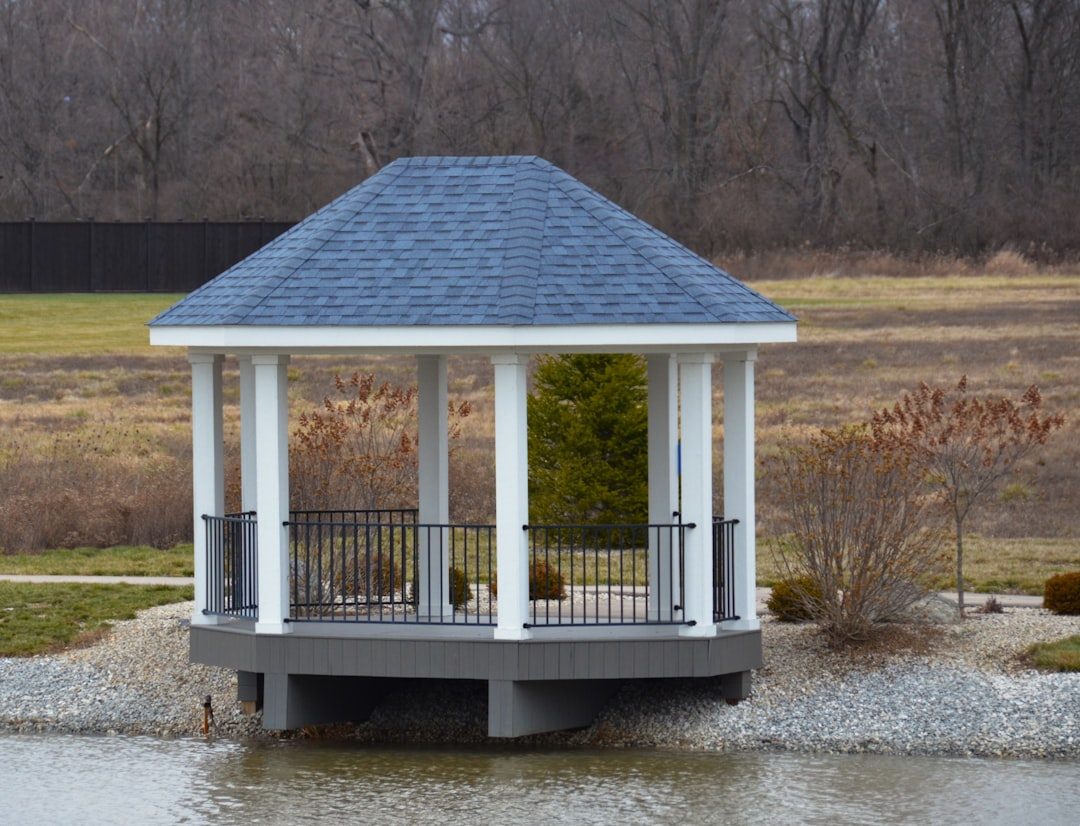
Clients almost always ask about color and price, and almost never about sound. That's a mistake. A gazebo roof sits right above your head — not like a house roof, where there's three meters to the ceiling plus a layer of insulation. Here, the metal sheet is about forty centimeters from the top of your head, and when it rains, you'll hear it like never before.
Rain noise is not a small thing
Metal is a drum. A thin steel sheet rings out sharply with every raindrop, especially if there's no solid sheathing underneath — just sparse battens. In a gazebo without walls, or with open sides, the sound also bounces off the deck and posts — you can sit through a downpour like that, but talking is hard. Asphalt shingles muffle the sound almost completely: the fiberglass mat and granule layer act like a membrane, and rain turns into an even rustle, like in a forest. If the gazebo is meant for evening sitting in the rain with a glass of something warm, this difference is worth its weight in gold — not just abstract aesthetics.
Here's something many people argue with me about: I rarely install metal roofing on a gazebo, and not with much enthusiasm, unless the client specifically insists on it. Not because it's bad — but because a gazebo is a place to relax, not a shed, and noise bothers you more there than on a utility building.
Snow on a gazebo roof
With metal, snow slides off in one whole sheet in winter — the surface is smooth, nothing holds it back. That's fine if nobody stands under the slope and there's no path there. It's a problem if the gazebo is near an entrance or a parking spot: a slab of snow sliding off from a height of a meter and a half to two meters is no joke, especially after a thaw, when the snow is wet and heavy. On asphalt shingles, snow sits and melts gradually, coming down in layers rather than all at once. For a small garden structure with a low roof slope, that's a lot more reassuring.
What happens to the roofing after ten years
Metal itself doesn't rust much (the polymer coating holds up) — it's the scratches and cut edges at the ridge, valleys, and screw points that rust. After five to seven years, rust spots often appear along the edges of the sheets — condensation under the metal does its work, especially if the ventilation gap under the roof was estimated by eye rather than calculated. Asphalt shingles gradually lose their granules; after ten years the color turns more matte, but the structure doesn't leak or rust — there's simply no metal in it to oxidize.
There's a detail roofing shops don't mention: asphalt shingles can't be installed in freezing temperatures — they stiffen and crack during installation, so our season for them runs from April to October. Metal we install year-round. If a project is urgent and you need a roof in November, the choice stops being about looks and becomes purely practical.
[craftsman's story: a case with a gazebo where the client insisted on metal in winter, and regretted it two years later]
Price now and price later
Metal is cheaper upfront — by about 15-20% on average, plus installation is a bit faster: the sheet is fastened with screws onto the battens, saving roughly a day of work. Asphalt shingles cost more upfront, but they don't rust at cuts and fasteners, and the nails are tucked under the next row of shingles, so after ten years, local spot repairs are rarely needed. With metal, a local repair means repainting or replacing the whole sheet, because after ten years of sun-fading, you won't be able to match the color.
If you calculate not as a one-time cost but over a ten-year horizon, factoring in likely minor repairs, the price difference between the two roofing types shrinks close to zero — and sometimes asphalt shingles even come out ahead, simply because they need no attention at all.
What doesn't change based on the roofing choice
I build the frame the same way for both options: 120×120 mm posts, a 90×90 mm top beam, and a rafter system calculated for the snow load of the specific region. All the wood is kiln-dried pine, 16-18% moisture, treated with oil and antiseptic before assembly, including the end grain. I never use varnish outdoors — it cracks and peels within two to three seasons, and removing it afterward is harder than simply refreshing the oil. This isn't strictly about roofing, but since the roof rests on the frame, the frame has to be built just as honestly.
In short
- Metal is louder in the rain; asphalt shingles muffle sound almost completely
- Snow slides off a metal roof in one sheet; off shingles, it comes down gradually
- Metal is cheaper now, but the risk of local rust at cuts and fasteners grows after five to seven years
- Asphalt shingles can't be installed in freezing weather; metal can be installed any season
- Over a ten-year horizon, the price difference often evens out due to maintenance
- The gazebo frame is the same for both roofing types: kiln-dried pine, oil with antiseptic, no varnish
If you're not ready to decide blind, our website has a 3D configurator where you can set the roof shape, try both roofing options, and instantly see the price difference for your gazebo's specific dimensions.
Photo: Jörg Reichelt / Unsplash
Shape, size, roof, walls — see the price instantly, no calls needed.